Author Archives: Foiling Week

A-Class: Floaters and Foilers

by sailingscuttlebutt.com

@KarenRyan_AClass-11

What went from three Canadians inviting themselves down on their way to Florida, became a 27 boat flash regatta on November 21-22 at Lake Lanier Sailing Club in Atlanta, Georgia. In fact, we had over 30 boats planning to attend but a few had to miss out due to container deliveries and other things in life.

Lake Lanier provided the perfect, central location for A-cat sailors to drive for a weekend regatta. With sailors coming from New Orleans, Florida, Virginia, North Carolina, Tennessee, Missouri, New Jersey, Rhode Island, and even as far as Toronto, Canada, the first ever Woods Brothers Invitational Regatta was a serious success. Entry fee was a big $25 for the weekend with $10 for dinner Saturday night. Grand Prix baby with two pro photographers and unlimited drinks.

Friday brought numerous sailors to the water for 2 practice races in extremely light conditions, with the trail continuing to the Tannery Row Ale house for dinner with one of the largest HD LED displays in the country. Something about gambling and an interstate poker club. The design and development conversation raged on through the evening… was topic number one…

Continue rading on sailingscuttlebutt.com

Flying Phantom Series – Bermuda 2015

by phantom-international.com

fpbermuda

This week-end will start the final act of the 2015 Flying Phantom Series that will take place in Hamilton – Bermuda from the Sunday 29th of November to Wednesday 2nd of December 2015.

An international fleet of Flying Phantoms will come together to enjoy 4 days of intense racing on Bermuda’s Great Sound. Bermuda was host in October of the Louis Vuitton America’s Cup World Series racing circuit and will be the venue for the 2017 America’s Cup. With the Flying Phantom Series Bermuda 2015, it will confirm that Bermuda is the place to be for foiling events.

The One Design races will take place in the Great Sound, the large body of water surrounded on almost all sides by the islands of Bermuda. A spectacular location offering what should be ideal conditions.   The Flying Phantoms will be racing against each other on a course specially prepared by the Regatta Director David Campbell James. These courses will be laid out to offer a reaching start with a clearing mark in the middle, a leeward gate, a windward gate and a reaching finish after rounding the final mark. This should ensure fast, exciting and close racing on catamarans that take off in just seven knots of wind and can fly at two and half times the real wind speed.

Thirteen Flying Phantom teams registered with two additional pending coming from Europe and USA as well as from Bermuda as Oracle Team USA and Artemis Racing have based their own Flying Phantoms there.

DMS Sailing team – UK: Tom Phipps & Jonathan Cook
Artemis Racing – SWE: Nathan Outteridge & Iain Jensen
Artemis Racing – SWE: Luke Parkinson & Ayden Menzies
Team Tilt – SUI: Sebastien Schneiter & Lucien Cujean
Sailing Team Phantomas – GER: Raphael Neuhann &  Elias Neuhann
Lupe Tortillas – USA: John Tomko & Jonathan Atwood
Blag Flag Racing – FRA: Hugo Fedrigucci & Virgil Aubriot
Team Momentys – FRA: Normand Thomas & Antoine Joubert
Team Rogues – FRA: Sebastien Rogues & Cantin Roger
Team Zoulou – FRA: Erik Maris & Christian Tiggeler
Solidaires en Peloton – FRA: Thibaut Vauchel-Camus & Benjamin Lamotte
Phantom Sailing Team – FRA: Gurvan Bontemps & Benjamin Amoit
Phantom Sailing Team – FRA: Billy Besson & Matthieu Vandame
+ Pending Oracle Team USA

Phantom International wish to thank the sponsors and partners that made this possible: Bermuda TourismHarkenGosling’s RumKaenon and Royal Bermuda Yacht Club

Schedule of the event

Saturday 28 November
0900 – 1800   Measurement/Registration/Inspection
1730         Competitors Briefing
1800         Opening Ceremony

Sunday 29 November
1055         Racing

Monday 30 November
1055         Racing

Tuesday 1 December
1055         Racing

Wednesday 2 December
1055         Racing
1730         Prize Giving and Closing Ceremony

To follow the event: Flying Phantom Series Facebook page : https://www.facebook.com/events/494805030694544/

Imoca : Maître CoQ déploie ses ailes

by maitrecoqvoile.com

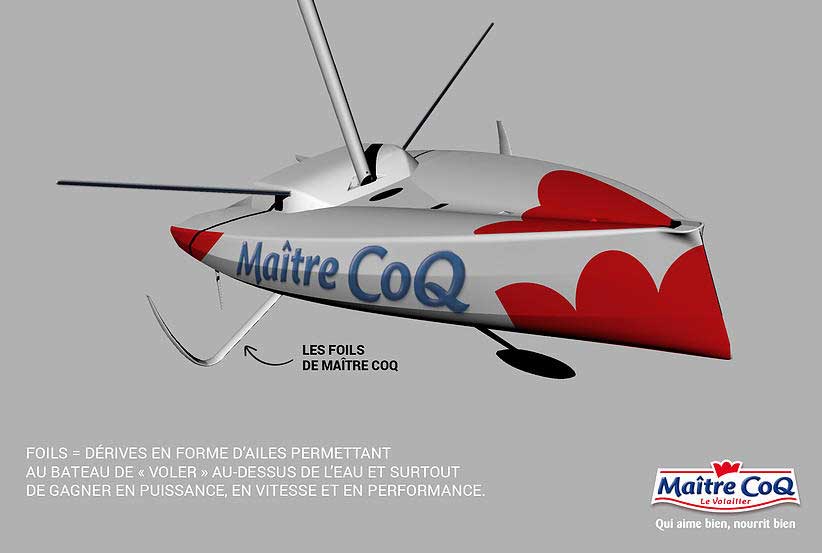
Jérémie Beyou et Maître CoQ se projettent vers le Vendée Globe 2016. Affichant clairement leurs hautes ambitions, ils ont pris la décision commune d’équiper le 60 pieds IMOCA de foils en vue du tour du monde en solitaire. Le bateau entrera au chantier CDK de Port-la-Forêt le 25 novembre.

Maître CoQ 60 pieds IMOCA

Maître CoQ 60 pieds IMOCA

Jérémie Beyou, Stéphane Sallé, Directeur Général de Maître CoQ, et Philippe Legros, responsable de la performance, nous expliquent les raisons qui ont dicté ce choix et évoquent la collaboration avec le designer néo-zélandais Nick Holroyd, spécialiste des foils sur l’America’s Cup.

Pourquoi avez-vous pris la décision de doter Maître CoQ de foils en vue de la saison prochaine?
Jérémie Beyou : « Cela fait plusieurs mois que nous travaillons dessus : nous avons commencé par faire un VPP (programme de prédiction de vitesse) précis du bateau dans sa configuration actuelle, puis simulé un autre VPP avec le bateau équipé de foils de différentes géométries. Nous avons ensuite fait tourner ces VPP sur des routages autour du monde, qui n’ont fait que confirmer les chiffres obtenus, à savoir que Maître CoQ avec des foils était toujours plus rapide sur la durée, certains routages donnant jusqu’à cinq jours de différence. Ensuite, nous nous sommes comparés aux nouveaux bateaux mis à l’eau cette année : si, lors des premiers wwws d’août, nous avons été un peu circonspects, ceux de septembre nous ont permis de constater que certains nouveaux bateaux avaient beaucoup progressé, notamment Banque Populaire, tandis que Gitana (Edmond de Rothschild) a été d’entrée de jeu bluffant à certaines allures. »

La victoire sur la Transat Jacques Vabre d’un bateau non équipé de foils, a-t-il remis en cause votre choix?
Philippe Legros : « Non, au contraire, il nous a confortés dans notre décision : vu le contexte, la performance de Banque Populaire (deuxième place) est remarquable : on a bien vu qu’ils (Armel Le Cléac’h et Erwan Tabarly, les skippers) ont volontairement navigué beaucoup plus prudemment que les autres en début de course, ce qui leur a permis d’être le seul des bateaux neufs à passer. Une fois que le vent s’est calmé et que la mer s’est rangée, ils ont pu utiliser leurs foils, et à partir de là, de 40 milles de retard, ils sont passés à 35 d’avance au Pot-au-noir. Le bateau, dans cette configuration, a des capacités d’accélération impressionnantes sur la durée. Ces performances ont donc confirmé nos études et nos observations et je pense que si la course avait eu lieu un an plus tard, Banque Populaire, bien plus fiabilisé, serait arrivé nettement devant PRB. En vue du Vendée Globe, nous avions le choix entre optimiser encore Maître CoQ en faisant notamment de nouvelles dérives ou passer aux foils, Jérémie a été clair sur le sujet : son objectif, c’est de gagner. Ce qui n’est à notre avis pas possible avec des dérives seules. Les différences de vitesse entre les « foilers » et anciens bateaux peuvent aller jusqu’à 3 nœuds au reaching. Sachant que le Vendée Globe est avant tout une course de reaching, les écarts à l’arrivée pourraient se compter en jours. »

Votre abandon sur la Transat Jacques Vabre a-t-il influé sur votre décision?
Jérémie Beyou : « Nous avions quoi qu’il arrive anticipé, en réservant pour cet hiver Heol Composites et le chantier CDK de Port-la-Forêt pour fabriquer et implanter ces foils ou au minimum des nouvelles dérives. Le fait de ne pas courir la Transat BtoB nous permet de démarrer le chantier plus tôt, donc de naviguer le plus possible avec le bateau en version Vendée Globe. C’est primordial, compte tenu de l’importance des modifications qui nécessiteront beaucoup de temps de fiabilisation, de mise au point et d’optimisation. »

Avec qui collaborez-vous pour ces foils ?
Jérémie Beyou : « Avec Pierre-François Dargnies, le directeur technique de Beyou Racing qui travaille sur le dossier depuis plusieurs mois, nous avons fait tout l’avant-projet avec Sam Manuard, qui nous a aidés pour les études préliminaires ; ensuite, nous avons souhaité collaborer avec des gens ayant déjà travaillé sur ce type de pièce, à savoir le chantier CDK et Heol Composites, qui a construit tous les foils des nouveaux bateaux, sauf ceux d’Hugo Boss. Au niveau du design, nous sommes allés regarder du côté de l’America’s Cup en faisant appel à Nick Holroyd, que je connaissais de réputation. Il a été « head-designer » de Team New Zealand pendant des années et a donc une très grande expérience dans le domaine du foil, c’est quelqu’un de brillant, un « ultra spécialiste ». Comme il quittait Team New Zealand (il a depuis rejoint SoftBank Team Japan), il a répondu favorablement à ma demande. Il est venu sur le bateau, il a tout de suite vu quels foils il fallait, quelles autres problématiques cela induisait…

Je suis très heureux de collaborer avec lui. Enfin, je vais personnellement m’impliquer dans ce chantier pour m’imprégner de toutes ces modifications. Je vais aussi mettre à profit cette période pour passer du temps avec Maître CoQ afin de préparer au mieux ce Vendée Globe à tous les niveaux. C’est un moment hyper important pour tout le monde, il faut faire en sorte que nous le vivions tous du mieux possible. »

Quelle est la position du partenaire Maître CoQ par rapport à cette décision de faire des foils?
Stéphane Sallé, Directeur Général de Maître CoQ : « Notre accompagnement aux côtés de Jérémie s’appuie sur plusieurs valeurs fortes : performance, audace, innovation, partage, confiance… L’optimisation du potentiel de l’IMOCA Maître CoQ sur le prochain Vendée Globe passe par ce choix de poser des foils qui représente l’avenir de la course au large. Si Maître CoQ n’avait pas innové par le passé, nous ne serions pas leaders aujourd’hui. L’innovation et l’audace sont les clés de la réussite de Maître CoQ : créer de nouveaux produits qui répondent à de nouvelles envies et se différencier dans un milieu hyper concurrentiel. Il en est de même sur le prochain Vendée Globe qui est l’objectif N°1 de notre programme de sponsoring. »

First Foiling Training Center in France

by Pascale Gillard

July 25th, 2015, Portsmouth(GBR), America's Cup World Series, © Yvan Zedda

July 25th, 2015, Portsmouth(GBR), America’s Cup World Series, © Yvan Zedda

After months of studies, followed by the search for a solid pool of partners, the National school of sailing and water sports is ready to officially launch the very first Foiling Training Centre in France. The first foil boards are expected end of October 2015 on the bay of Quiberon.

This is a remarkably ambitious project, initiated by the school of excellence Envsn, for the world of sailing in general. The school is ready to welcome young sportsmen and women with strong potential and provide training that will give them access to top-level sport, and maybe even professional sailing.

A pioneer centre for foiling training

An innovative idea

The aim of the Envsn training, practice and research facility is to contribute towards the training requirements of young sportsmen and women and professionals; taking them to top-level competitive sailing in foiling multihulls (catamarans and trimarans). It plans to cater to the needs of professional teams who are looking for young sportsmen and women from the FFVoile elite sporting scheme (PES) and its training facilities (Pôles France and Pôles Espoirs), by developing a tailor-made training programme devoted to these new innovative sailing techniques.

Partners

While the Morbihan regional council covers a significant part of the costs for training and regatta entries, others provide technical or material support, such as BIC Sport, who is providing three Flying Phantom foiling catamarans in the colours of the world leader in sailing sports and partners. In the same spirit, Groupama Team France who has chosen the Envsn as one of its training sites is contributing to the project by providing two GC32. The FFVoile is also playing an active role, offering its recruiting skills and expertise and supervising this top-level training scheme.

Aiming for excellence

A unique site for exceptional training

The bay of Quiberon was the natural choice for this project as it particularly suitable for the different types of navigation required for foil training. It possesses all the types of navigation zones within the same site: flat sea, swell, current or waves. As for the Envsn, it has been involved in training talented young multihull racers including Billy Besson and Moana Vaireaux, both currently in the French Olympic team.

Tomorrow’s foilers

So who will have the honour of joining this very first elite class?

A small number of 18 to 22 year olds, selected via the FFVoile contest, will have the privilege of following a one-year alternate training course, taking advantage of the best material (Phantom multihulls, Diam 24 and GC 32), the latest technology and exceptional multisport training conditions (performance optimisation on classic regatta circuits or on raids, personalised medical monitoring). Learning to fly on water is no easy challenge… This class will not only have the privilege of belonging to the world of “new generation” sailors, but will also take part in the transformation of the sport thanks to hydrofoil vessels.

The Flying Phantom mission initiated by the Envsn, BIC Sport and the Morbihan Regional Council will be coupled with the mission led by Groupama Team France and Association Team France in partnership with FFVoile, consisting of assembling a DIAM 24 youth crew under the Team France colours, who will be present at the Tour de France à la voile 2016 and at early season events.

july 23th 2015, Portsmouth(GBR), America's Cup World Series, Groupama Team France, Skipper, Franck Cammas. © Yvan Zedda/ Groupama Team France

july 23th 2015, Portsmouth(GBR), America’s Cup World Series, Groupama Team France, Skipper, Franck Cammas. © Yvan Zedda/ Groupama Team France

With the expert support, high level assistance and implication of the FFVoile, these two missions will be preparing all or some of the crew members who will take part in the Youth America’s Cup 2017, under the Team France colours.

Training sessions will take place at the Envsn, supervised by three experts: the FFVOILE, Groupama Team France and the Envsn.

Following in the footsteps of mentor

Franck Cammas…

In keeping with this quest for excellence, who better than Franck Cammas to sponsor this project? As the symbol of excellence in French sailing, he will be sponsoring these future champions and accompanying them throughout their training programme. At the helm of his foil-equipped AC45, he will be regularly present at Saint-Pierre de Quiberon for his own training sessions and will also to take part in the recruitment phase with Groupama Team France, in preparation for the America’s Cup in June 2017. The challenge for these young sportsmen and women is almost a dream beyond belief: lining up beside their mentor with Groupama for the Youth America’s Cup, set to take place in Bermuda in June 2017.

Specific training courses for pros

During the first half of 2016, training courses for professional racers who have never had the opportunity to try foiling will take place. Group training sessions will also be available for those who perform this sport.

Training for the coaches

If there is no coach there is no training centre. It appeared essential to provide the professional coaches with training in this extreme sport. Effectively, safety is crucial for hydrofoil navigation and racing. The speed of these vessels implicates issues that differ from traditional methods of training for sailing, both in terms of safety and tactics that must be mastered and communicated to those who partake in this high-level sport.

Franck Cammas rounds Cape Horn in a foiling catamaran

by Sail-World.com

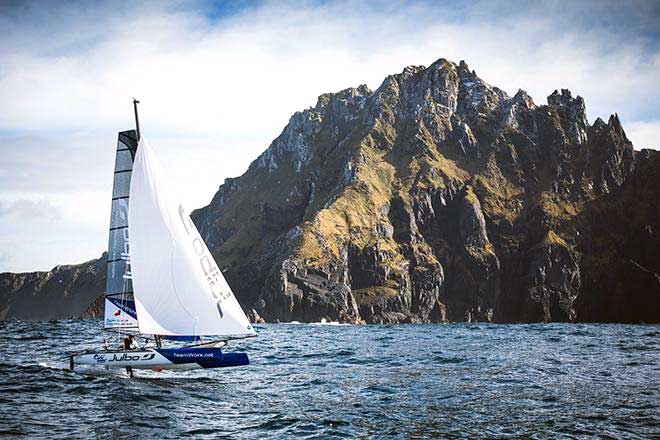
Cap Horn - Julbo Sail Session 2015 © Jeremy Bernard

Cap Horn – Julbo Sail Session 2015 © Jeremy Bernard

Franck Cammas, one of the most successful French sailors in the world, has done what no one has achieved before – rounded Cape Horn in a foiling catamaran

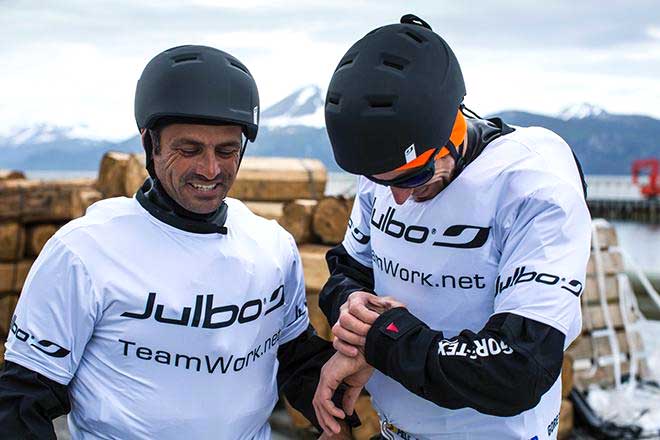
As part of the Julbo Sail Session, Franck Cammas rounded Cape Horn in a Nacra F20 Carbon FCS accompanied by a novice sailor -Johannes Wiebel (GER).

Weather conditions were good, with 15 knots of wind and 2.5-metre waves.

Cap Horn - Julbo Sail Session 2015 © Jeremy Bernard

Cap Horn – Julbo Sail Session 2015 © Jeremy Bernard

‘It’s been a really great and successful adventure,’ Franck Cammas said after getting back on land. ‘It’s unusual to have a weather window in 10 days for a boat like this to round Cape Horn. It’s my third passage and it’s really uncommon to do it with such a small boat.’

GC32 comes sailing down under

by LiveSailDie.com

© Team Vodafone Sailing

© Team Vodafone Sailing

It looks like Team Vodafone Sailing will have some competition on their hands!!!

Keri Keri, New Zealand – MARWIN RACING TEAM are bringing their GC32 foiling catamaran to sail in Bay of Islands and Auckland, New Zealand from December 2015 until March 2016. This new dynamic MARWIN RACING TEAM is an exciting collaboration between the four times Swiss Star Class Olympian and local New Zealand multiclass sailor and two time Olympian Sharon Ferris-Choat.

The GC32 ranks as the most exciting one desig n, America’s Cup style, foiling catamaran on the market – attracting worldwide media attention. Shipped directly from the inaugural GC32 European Racing Tour, the boat is ready for an action packed summer in New Zealand with race training, youth crew development and regattas.

Co-helm and Team Manager Sharon Ferris-Choat announced that team and crew trials will start in January for crew positions in the 2016 GC32 Racing Tour, the MARWIN Youth America’s Cup Academy and the Women’s Speed Challenge. “This is an amazing opportunity for local sailors to break into a European tour, on a world-class boat and as part of a professional team that successfully competed in the 2015 GC32 tour” said Sharon.

Racing in the GC32 tour round in Marseille, France, the boat reached a top speed of 37.1 knots (68 km/ph) and the team hope to bring this spectacle of speed to New Zealand waters racing in the Bay of Islands Race week and other regattas. The foiling catamaran is currently on a ship to New Zealand and is due by Christmas, giving the team time for selection trials, training and local racing through to March before the boat heads back to Europe.

Contact information: Sharon Ferris-Choat, MARWIN RACING TEAM, Team Manager
Facebook: www.facebook.com/nzgc32
Website: www.marwin.com

GC32 designer Martin Fischer talks foiling

by  Extreme Sailing Series

© Sander van der Borch / Bullitt GC32 Racing Tour

© Sander van der Borch / Bullitt GC32 Racing Tour

With the Extreme Sailing Series™ moving to the hydro-foiling GC32 catamaran in 2016, German naval architect and GC32 designer Martin Fischer talks through the technicalities of how these unbelievably fast rocketships rise up out of the water and fly across the surface.

Dr Fischer, who is at the forefront of the revolution in sailing brought about by the invention of foils, has got used to simplifying the complex design features and theories that underline a step-change in sailing that has already turned the leading edge of the sport into a hybrid between yachting as we thought we knew it and flying.

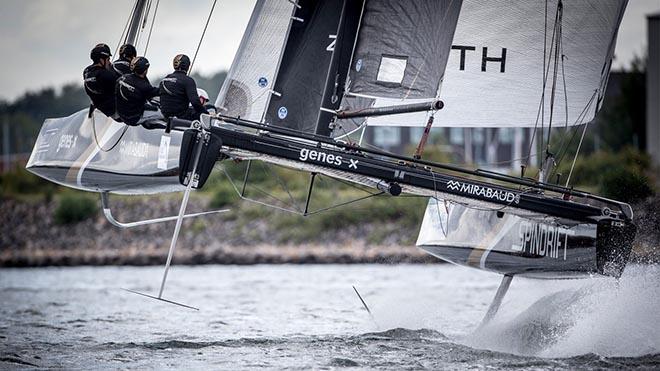
The key innovation is the foils, the slender carbon-fibre winglets or arms that are deployed under both hulls of the GC32 and provide the magical ingredient – lift. This is what enables the GC32s to rise up above the surface and fly in the air above the waves, travelling at speeds that would be unimaginable on conventional “displacement” boats.

“The foils work like wings on an aeroplane,” explained Dr Fischer, a physicist and specialist in fluid dynamics who has worked on America’s Cup yachts, Volvo Ocean Race yachts and maxi-multihulls for solo sailors. “The foils do two things at once on the GC32. They provide lateral resistance to counteract the sideforce created by the sails but, in addition, they also create a vertical force that pushes the boat up.”

And here’s the critical bit: “The faster you go, the more powerful this upwards force is and, at a certain speed, the vertical lift is big enough to carry the whole weight of the boat out of the water, just as a wing on a plane lifts the fuselage off the ground.”

One big difference between a racing catamaran and a plane is that a plane needs to keep rising to reach an altitude at which it can fly safely. By contrast a boat can only rise a relatively small amount before its foils lose contact with the water. If that happens the foils stall and the boat suddenly crashes into the weaves and stops. Not good.

To stop the GC32 rising too high, Dr Fisher worked out a profile for the foils so that the height of the boat stabilises automatically. “We opted for a V-shaped foil,” he said. “The specificity of this shape is such that it stabilises the foiling height automatically without any interaction from the crew. That makes it pretty easy for an inexperienced crew to sail this boat.”

In comparison to the foils that we saw being used at the 2013 America’s Cup in San Francisco, the foils on the GC32s are quite big. This is because you need bigger foils to generate lift in light airs and, unlike the big cats on San Francisco Bay where there was plenty of wind, the GC32s need to work in a broad range of conditions and often very light winds. The critical element is the take-off speed. At what point will the boat come up and start to fly? After running a series of simulations Dr Fischer arrived at a take-off speed of around 16 knots of boatspeed. This is achieved in about 14 or 15 knots of wind when the boats are going to windward and about eight knots of wind when the boats are going downwind under spinnaker.

Fischer knows perhaps better than anyone what it will take to race them at optimum performance. He says that with so many control points to adjust – rudders, sails, foils – trimming the boat and understanding where to deploy crew in terms of weight and balance will be critical. He predicts that subtle variations across the Extreme Sailing Series fleet will make all the difference in any given set of conditions.

Overall, however, the key will be managing the transition between displacement mode and foiling, especially at the turning points on the course. “Tacking and gybing are not so easy because on a foiling boat the speed is really high and during a gybe, for example, you lose a lot if you get back to displacement mode,” said Dr Fischer. “In order to reduce that loss, the crew have to be able to perform foiling gybes and that requires quite a bit of training, especially on a boat like the GC32 that does not have hydraulic systems to control the foils like on the America’s Cup boats.”

For everyone this is going to be an exciting season in the Extreme Sailing Series. For Dr Fischer, the adoption of the GC32 class is a special moment. “It is very exciting to have the GC32 in the Extreme Sailing Series. I am very proud of it.” he said.


A photographer’s bio

By foiling Week™

We asked our official photographer to describe herself

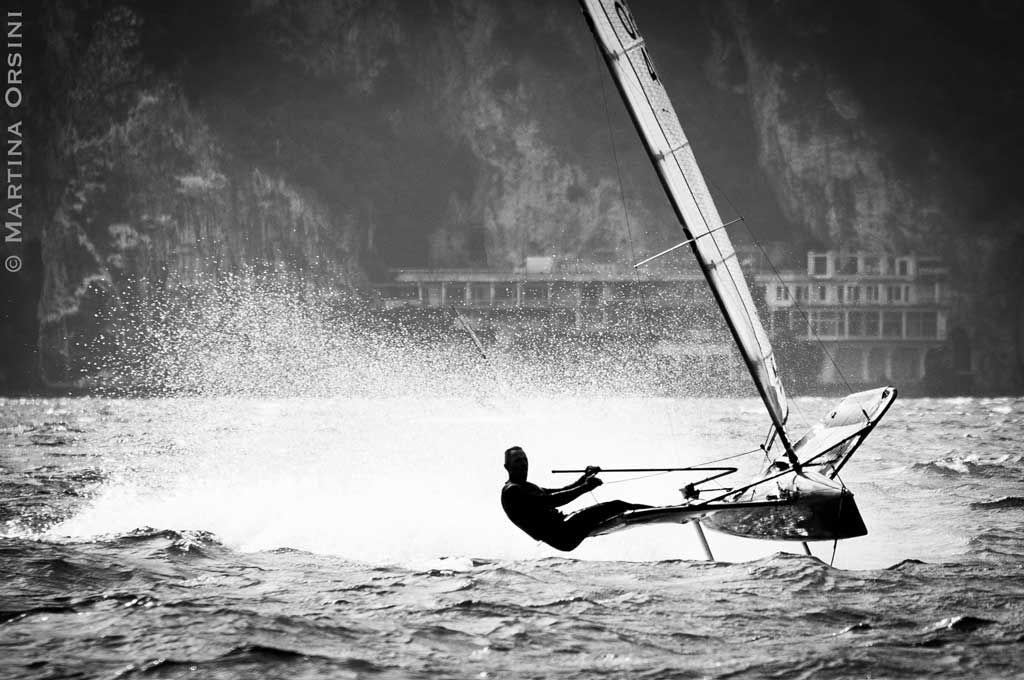
Martina Orsini

Martina Orsini

Since I was a child, I grew up loving travel and sailing, THANKS to my parents’ work and passion. They brought me in their travels and I remember I was always amazed by the diversity of landscape and culture IN every single country I visited. I needed to “record” everything I saw and, at some point, I realized that pen and notebook were not enough to do it. that’s how I had my first analogic camera, the ideal way to equipe my travel reports, with images.
In the same way the desire to go sailing did grow in me: I spent all the summers on board . I didn’t want to be a simple passenger,I wanted to be useful and, above all, I wanted to be able to say “One day I’ll go to see the world around the seas”. I started attending courses on dinghy and I understood immediatly that sailing was for me the most beautiful and poethic sport in the world.


Photography and sailing boats have been my two passions for over twentynine years. I developed them at the same time during high school and university. My first works as a photographer were travel articles written and snapped by me. After the graduation in philosophy, I choose a master in Photography and Visual design to study in depth the art of photography in all its aspects; it was no longer just a passion but it was becoming more and more a need, a way to express myself.


The opportunity to combine these two great loves was given to me in august 2012: I was called to do black and white portraits about sailors during the Moth World Championship in Campione del Garda. I remember I focused a lot on the surprise effect: I have never liked the portrait posing and so I was looking the most authentic expressions of the athletes while they were fitting out their boats, joking between them or waiting the wind’s coming. The human aspect has always been a pivot on which I wanted – and still want – to build my work, both in yacht race photography and in all the other types of photography.

After this event a kind of “chain reaction” has been generated and now I’m the official photographer of the Italian Moth Class Association, of the Foiling Week, of the “Vento di Sardegna” Team and of many other events linked to the nautical world. Follow the construction of a boat in the yard and see it born, taking pictures in beautiful places, try those same boats subjects of my photographs and say right now “I’m doing what I always loved”, it can only be an achievement for me, a satisfaction. And I hope to keep it doing until I really go around the seas to see the world with my boat, armed with a Nikon!

Vote for Martina at 2015 MIRABAUD YACHT RACING IMAGE

Vote for Martina at 2015 MIRABAUD YACHT RACING IMAGE

(Facebook access needed)

More on Martina at www.martinaorsini.blogspot.it

The Kiwis not so secret weapon

by America’s Cup

https://youtu.be/R2ZwrUuZ8gM

Peter Burling, winner of the inaugural Red Bull Youth America’s Cup, has helmed Emirates Team New Zealand to the lead after the first three Louis Vuitton America’s Cup World Series events. And he, along with his 49er and LVACWS crew Blair Tuke, has just been named the ISAF Male World Sailor(s) of the Year.

Foiling Moth is first around Hong Kong

By mysailing.com.au

mothhrg

… Finding adequate breeze, Stompf-Jepsen noted the scorching progress of RHKYC Coach, Rob Partridge on his International Moth, who had already passed through the second of two check-in gates at Cyberport and quickly made the decision to allow the fleet to ‘go all the way’.

Partridge finished after just over 2 hours and 47 minutes of racing – not a course record but enough to claim Line Honours by a country mile. Next boat to finish was at the other end of the size spectrum, with Frank Pong’s 72 foot Jelik completing the course ahead of a mix of big boats, dinghies, one-design keelboats and beach catamarans …

Read more at mysailing.com.au